
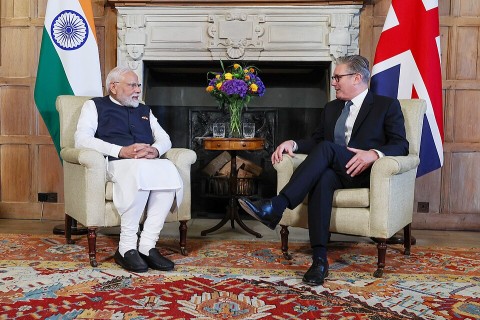
Keir Starmer, the outgoing British Prime Minister, has marked a significant diplomatic achievement by concluding the long-anticipated India-UK Free Trade Agreement (FTA) prior to announcing his resignation. Meeting with Indian Prime Minister Narendra Modi during the G7 Summit 2026, the two leaders set July 15 as the launch date for the India-UK Comprehensive Economic and Trade Agreement (CETA). This landmark agreement is projected to enhance the already substantial trade relationship between the nations, currently valued at approximately £48 billion annually.
Throughout his tenure, Starmer was a staunch advocate for bolstering ties with India, making the trade deal a pivotal goal of his administration. He emphasized the potential for economic expansion, citing India’s burgeoning economic clout and the advantages of more accessible and cost-effective trade channels between the countries. Since taking the helm of the Labour Party following its 2019 electoral defeat, Starmer focused on reconnecting with the British Indian community and fostering a robust partnership with India. Under his guidance, Labour prioritized collaboration with India across various sectors, including trade, security, education, technology, and climate action.
Before venturing into politics, Starmer had an illustrious career in law, notably serving as Director of Public Prosecutions. His political journey peaked when he became Prime Minister after Labour’s sweeping victory in the 2024 elections. Despite initial successes in stabilizing the economy and implementing domestic reforms, Starmer’s leadership faced hurdles due to policy challenges and political setbacks, which eventually eroded his standing.
In a heartfelt resignation address, Starmer conceded that his parliamentary peers no longer viewed him as the ideal leader for guiding Labour in the upcoming general election. He expressed respect and gratitude for their decision, thus closing a significant chapter in the realm of British politics.