
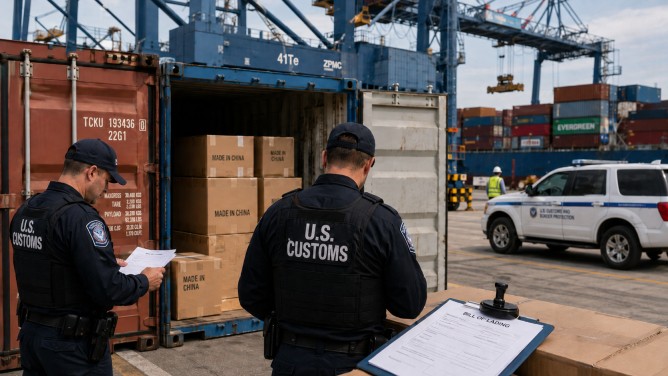
The United States has leveled accusations against 38 countries and the European Union, claiming they form part of a “shadow transshipment network” that allegedly enables Chinese goods, which are subject to hefty US tariffs, to enter the American market via third-party nations. This allegation, detailed in a report titled “The Great Transshipment Scam,” suggests that such potentially illegal activities might be responsible for around $60 billion worth of goods skirting tariffs. Consequently, this has reportedly led to considerable losses in US tariff revenues.
Among the countries and territories identified in the report are major players like India, Canada, the European Union, Israel, Japan, Mexico, South Korea, Taiwan, and Brazil, as well as others including Indonesia, Malaysia, Thailand, Turkey, Vietnam, and Argentina. Additional nations named include Azerbaijan, Bangladesh, Cambodia, Chile, Colombia, Costa Rica, the Dominican Republic, Georgia, Jordan, Kazakhstan, Kenya, Laos, Morocco, Myanmar, Oman, Panama, Peru, the Philippines, Singapore, Sri Lanka, Switzerland, the UAE, and Uzbekistan.
The report estimates that in 2025, approximately $67 billion worth of goods bound for the US were allegedly rerouted from China through significant hubs like Mexico, India, and Vietnam. This transshipment is believed to have resulted in around $28 billion in lost tariff revenue for the US. The document also points to the Pune-Gujarat-Chennai corridor in India, indicating that Chinese shipments of items such as electric pumps and compressors have bolstered local businesses while potentially heightening competitive pressures on US manufacturers.
In response to these findings, the United States is considering a series of measures aimed at curbing this practice. Proposed actions include more rigorous inspections and interdictions, the imposition of additional tariffs, sanctions, and possibly restricting market access for countries implicated in facilitating tariff evasion. These steps are seen as critical to safeguarding US economic interests and ensuring compliance with existing trade regulations.