
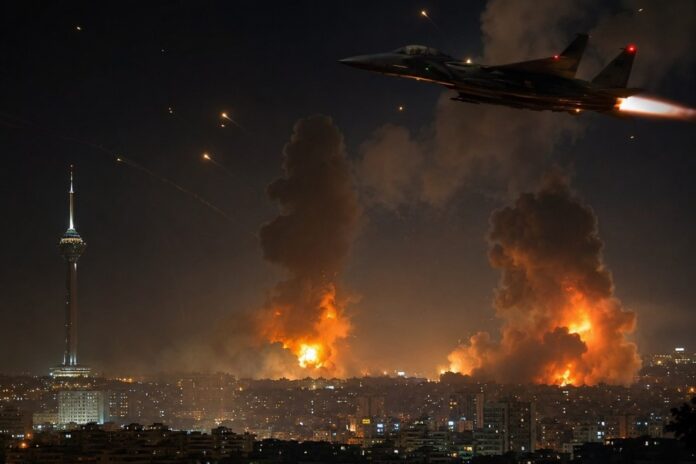
Amid escalating tensions, the United States has intensified its military operations against Iran, launching airstrikes for the third consecutive night. President Donald Trump has announced plans for a maritime blockade targeting Iran, alongside a 20% tariff on all cargo passing through the Strait of Hormuz, a crucial maritime corridor. These measures, according to the US Central Command, aim to weaken Iran’s military capabilities and prevent potential threats to commercial vessels and civilians in the area. Trump has underscored the nation’s commitment to maintaining security in this strategic waterway.
This heightened military activity follows an incident involving two oil tankers from the United Arab Emirates, reportedly struck by Iranian cruise missiles while in Omani waters. The attack tragically resulted in the death of an Indian crew member and injured several others, contributing to a surge in Brent crude oil prices by nearly 8%. This price hike reflects the growing concern over the security and stability of global energy supplies amid the ongoing crisis.
Iran has strongly condemned the proposed maritime blockade, accusing the United States of endangering international energy security. Tehran has warned that any attempts to restrict its access to maritime routes will be met with a robust response. Meanwhile, international maritime authorities have raised concerns about the legality of imposing transit fees in international waters, highlighting that such actions lack a basis in current international law.
The prospect of a broader regional conflict looms large as military hostilities continue to escalate. The ongoing assaults have disrupted shipping routes and exacerbated global economic uncertainties, with rising oil prices adding to the volatility. The strategic importance of the Strait of Hormuz, a key artery for international trade, makes the situation particularly precarious as tensions remain high.