
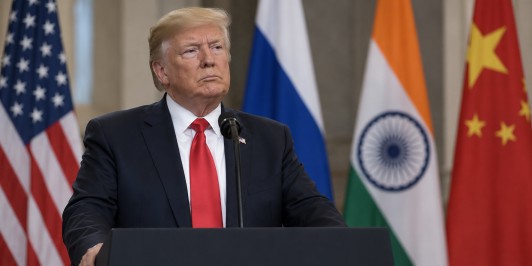
The potential for skyrocketing tariffs on Russian energy buyers looms as President Donald Trump considers leveraging new powers to pressure Moscow into ending the ongoing conflict in Ukraine. This development places significant economic pressure on major energy importers, including India and China, which could face tariffs up to 100% should they continue purchasing Russian oil and natural gas.
The new authority comes under the recently signed Lindsey O. Graham Sanctioning Russia and Iran Act of 2026, which President Trump introduced last week. The legislation equips the U.S. president with the capacity to impose severe tariffs aimed at deterring countries from supporting Russia’s energy sector, a critical component of its economy.
While addressing the United Nations General Assembly, Trump highlighted the importance of these measures, stating that the expanded tariff powers could be deployed if necessary to help bring an end to the Russia-Ukraine war. He also urged for a cessation of hostilities between the two nations, emphasizing the global need for peace and stability.
The law also encompasses a range of sanctions targeting Russian officials, financial institutions, and the energy sector, as well as networks accused of evading previous restrictions. Such comprehensive measures are designed to exert maximum pressure on Moscow, compelling it to engage in negotiations to resolve the conflict.
The decision to impose additional tariffs on India and China is not automatic and remains at the discretion of the U.S. president. This leaves both nations in a state of uncertainty, as future actions by Washington will determine the economic impact on their energy imports. Ukrainian President Volodymyr Zelenskyy has expressed support for the new sanctions, indicating his readiness for further talks aimed at achieving peace.