
The rapid expansion of India’s transportation infrastructure is dramatically cutting travel times across the nation, fundamentally altering how people move between key cities and regions. The development of expressways, bridges, tunnels, and modern rail services is not just a feat of engineering but a transformative shift for commuters and the economy.
Among the most significant improvements is the Delhi-Mumbai Expressway, which has slashed travel times from roughly 33 hours to around 12 hours. Similarly, the Delhi-Meerut Expressway now completes the journey in about 50 minutes, down from 2.5 hours. These expressways are reshaping daily commutes and facilitating quicker movement of goods and people, which is expected to boost regional economic activities.
Bridges and tunnels are also enhancing connectivity in remote areas. The Bhupen Hazarika Setu has notably reduced travel between parts of Assam and Arunachal Pradesh from six hours to just one hour. In addition, the Atal Tunnel, bypassing the Rohtang Pass, saves four to five hours for travelers heading to the Lahaul-Spiti region, supporting tourism and local economies.
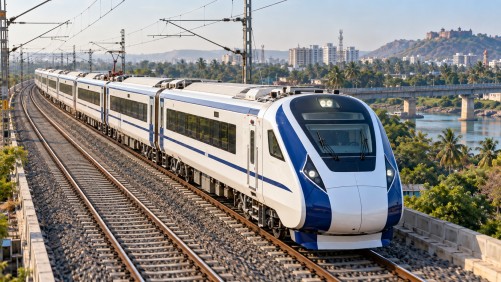
Modern rail services, including the Vande Bharat trains, are further contributing to reduced travel times on major routes. For instance, the New Delhi-Varanasi Vande Bharat service takes approximately eight hours, while the Katra-Srinagar service now completes the journey in three hours. These advancements are part of wider rail improvements scheduled through 2026, which will see speed enhancements for hundreds of train services.
Looking ahead, the Mumbai-Ahmedabad High-Speed Rail Corridor promises to be a game-changer once operational. This bullet train project, covering 508 km at speeds of up to 320 kmph, will reduce a road journey of eight to nine hours to a swift 1 hour and 58 minutes. The project, which includes a 7-km undersea tunnel, is targeted for completion by August 2027, marking a new era of high-speed travel in India.