
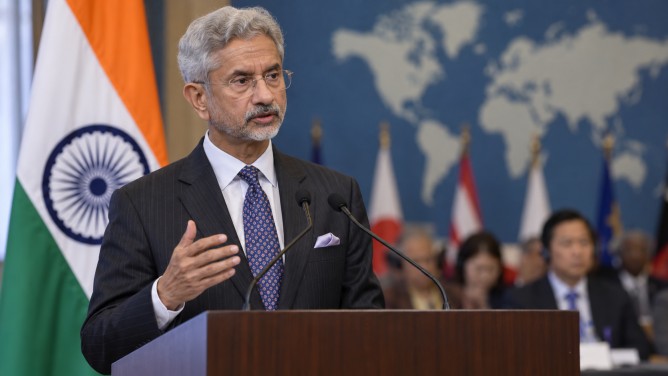
India’s evolving role as a “power in the middle” was highlighted by External Affairs Minister S. Jaishankar during a discussion at the Bloomberg New Economy Forum. Speaking alongside Canadian Foreign Affairs Minister Anita Anand, Jaishankar emphasized India’s significant population of 1.4 billion and its $4 trillion economy, suggesting that these factors position the country as a key player in reshaping the global order amid geopolitical uncertainty.
Jaishankar underscored the importance of cooperation among countries with shared interests, noting that alliances like the Quad and the India-Middle East-Europe Economic Corridor (IMEC) exemplify strategic partnerships addressing mutual challenges. He argued that nations are increasingly developing independent policies and building partnerships to strengthen their influence in international decision-making, reflecting a shift towards greater strategic autonomy.
The discussion comes in the context of calls by figures such as Canadian Prime Minister Mark Carney for middle powers to collaborate in protecting multilateralism and adapting to changes in the international system. Jaishankar stressed the need for these countries to identify areas of alignment and engage more closely with each other to tackle emerging global issues.
Anita Anand, echoing this sentiment, urged middle powers to play a more active leadership role in shaping the international order. She highlighted Canada’s strategies, including trade agreements and security partnerships, as well as its engagement in multilateral platforms like the G7, as methods to enhance economic resilience and respond to security challenges.
The forum discussion highlighted a growing recognition of the importance of middle powers working together to navigate economic uncertainties and geopolitical tensions. The emphasis was on coordinated action to strengthen national strategic autonomy while supporting shared interests and creating more resilient supply chains.